Treatment for asthma usually falls under two main categories. These are known as relievers and preventers.
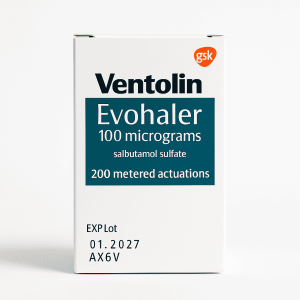
The reliever is almost always in the form a blue inhaler which may come in different forms/devices, however the function of the reliever is to give relatively rapid relief from symptoms of an asthma attack or breathlessness. Reliever inhalers are usually taken as and when required. An example of a reliever inhaler is Ventolin, also known as Salbutamol.
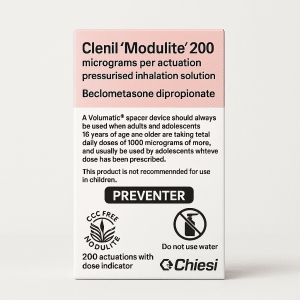
The preventer is usually an inhaler which is a colour other than blue, which is taken once or twice a day to help manage asthma and to help prevent asthma attacks in the long term. The doctor may also occasionally prescribe oral medication when inhaled therapy isn’t enough. An example of a reliever is Clenil Modulite inhaler, which is an inhaled corticosteroid also known as Beclometasone.
Clenil inhaler – Chiesi
Clenil is a preventer inhaler for people with asthma. It’s used daily to reduce inflammation in the airways and help prevent symptoms such as wheezing and shortness of breath. Regular use is key for effective control.
Clenil Modulite is an inhaled corticosteroid, and its most common side effects are local to the mouth and throat. These include oral candidiasis (thrush), hoarseness, and a dry or irritated throat or mouth. Rinsing the mouth with water and spitting after each use significantly reduces the risk of these effects. At higher doses, there is a potential for some systemic absorption, which may affect bone density with long-term use. Paradoxical bronchospasm, where the airways tighten immediately after inhalation, is a rare but important side effect that requires prompt cessation of use.
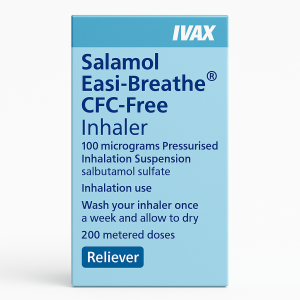
Salbutamol inhaler (Ventolin & Salamol)
Salbutamol is a fast-acting “reliever” inhaler used by people with asthma or other breathing conditions. It works by relaxing the muscles in the airways, making it easier to breathe during symptoms such as wheezing, coughing, or shortness of breath. It’s used as needed, with one or two puffs taken when symptoms occur, and can also be used before exercise to help prevent breathing difficulties.
Salbutamol is a short-acting bronchodilator, and its most common side effects include tremor (shaking of the hands), palpitations, and a temporary increase in heart rate. Headache and muscle cramps may also occur. Some patients notice a feeling of nervousness or restlessness following use. These effects are generally dose-related and short-lived. If salbutamol is needed very frequently, this may indicate that asthma is not well controlled, and a review of the overall treatment plan should be considered. Paradoxical bronchospasm is a rare but recognised side effect.
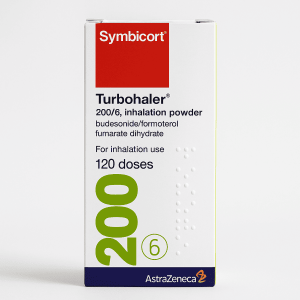
Symbicort inhaler – AstraZeneca
Symbicort is a combination inhaler used for asthma and chronic obstructive pulmonary disease (COPD). It contains two medicines: a corticosteroid to reduce inflammation in the airways and a long-acting bronchodilator to keep them open. It’s typically used once or twice daily as a preventer. Regular use helps improve breathing and reduce the risk of flare-ups.
Symbicort combines an inhaled corticosteroid with a long-acting beta-agonist, and its side effect profile reflects both components. Common effects include oral thrush, hoarseness, and throat irritation from the corticosteroid element, which can be minimised by rinsing the mouth after use. Palpitations, tremor, and headache may occur due to the formoterol component. Muscle cramps and dizziness have also been reported. At higher doses and with long-term use, there is a small risk of systemic corticosteroid effects, including effects on bone density and adrenal suppression.