Blood Pressure Chart UK: Understanding Your Readings and Health

One in three adults in the UK currently lives with high blood pressure, yet many only discover the issue during a routine check-up. It’s completely normal to feel a surge of anxiety when your home monitor flashes up numbers you don’t recognise or when you try to compare them to a blood pressure chart without guidance. Distinguishing between systolic and diastolic pressure can feel like learning a new language whilst you’re already feeling concerned about your heart health. At Dr Weightmans, we believe that understanding your data is the first step toward reclaiming control of your long-term wellbeing.
This guide will help you decode those digits so you can identify exactly where your health stands today. You’ll learn how to master your home monitor and understand the vital link between these readings and your weight management journey. We’ll break down each category and provide actionable steps to help you move towards a healthier range with confidence and clinical clarity. By the end of this article, you’ll have the tools to transform a confusing screen of numbers into a proactive plan for a healthier life.
Key Takeaways
- Understand the clinical significance of your systolic and diastolic readings to better monitor the force of blood against your artery walls.
- Utilise our UK-specific blood pressure chart to accurately categorise your results into low, ideal, or high ranges for adults.
- Discover how even modest weight loss can lower your blood pressure, empowering you to take control of your long-term health journey.
- Master the correct technique for home monitoring to ensure every reading is accurate, from proper resting to seating posture.
- Identify actionable lifestyle changes, such as reducing salt and increasing activity, to manage your heart health whilst following professional medical advice.
Understanding Blood Pressure: What Do the Numbers Mean?
Blood pressure is the measurement of the force your blood exerts against the walls of your arteries as it moves through your body. This pressure is essential for life, as it ensures oxygen and nutrients reach your organs and tissues effectively. Healthcare professionals measure this force using two specific numbers, recorded in millimetres of mercury (mmHg). This universal unit dates back to the first accurate pressure gauges that used mercury columns, and it remains the gold standard in UK clinics today. Understanding these units is the first step in taking control of your cardiovascular health.
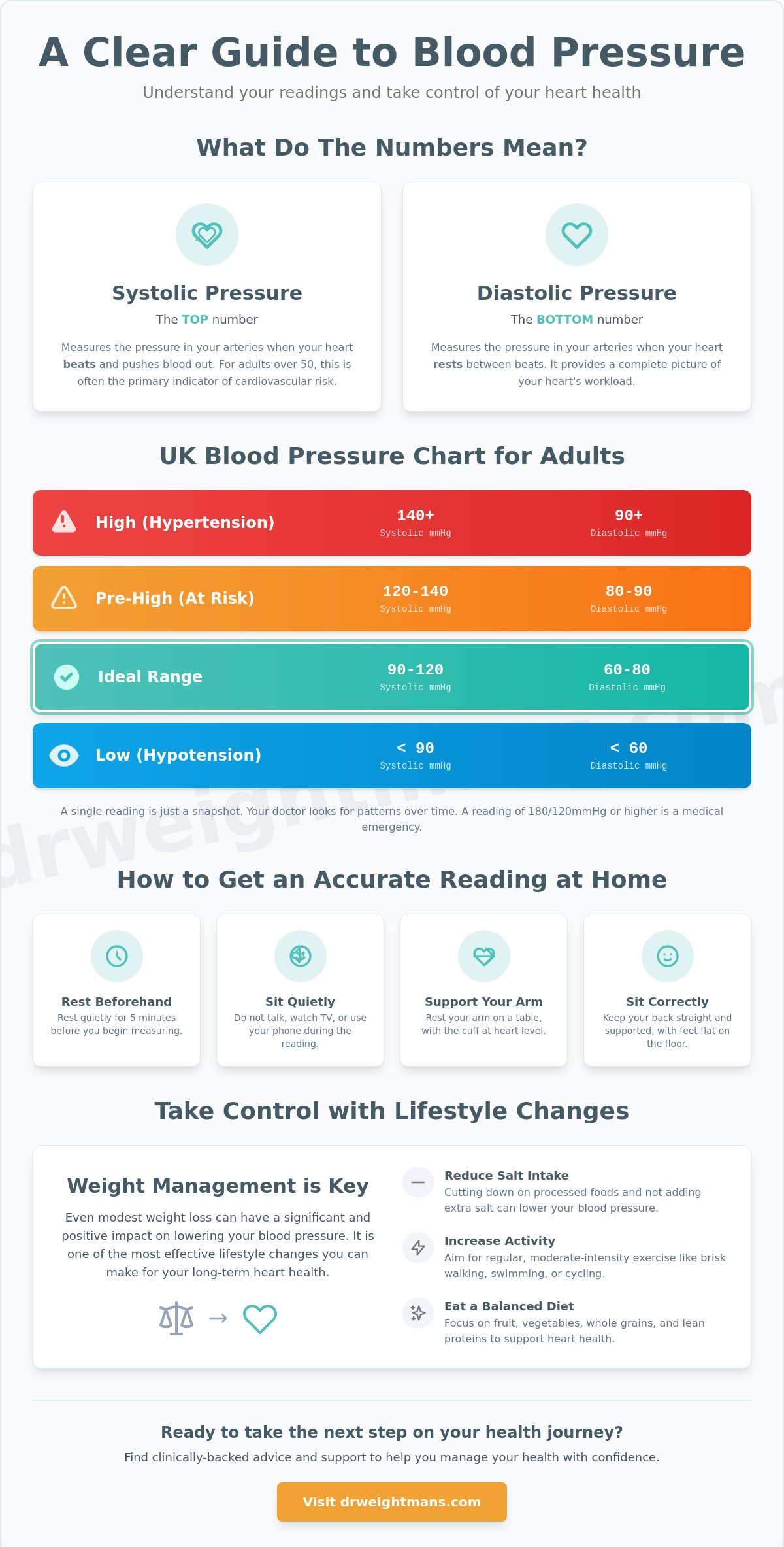
The first number, known as systolic pressure, records the force when your heart beats and pushes blood out. The second number, diastolic pressure, represents the force when your heart rests between beats. When you consult a blood pressure chart, you’ll see these figures presented as a fraction, such as 120/80mmHg. These figures provide a clear snapshot of how hard your heart and blood vessels are working to maintain your circulation.
Systolic vs Diastolic: Which Number Matters More?
Both numbers provide essential data for a full health picture, but their significance can shift depending on your age. For adults over 50, doctors often prioritise the systolic reading because it’s a primary indicator of potential heart disease or stroke risk. This is due to the gradual stiffening of major arteries that occurs as we age. Hypertension is a chronic state of elevated pressure that puts consistent strain on your cardiovascular system. Monitoring both figures ensures your clinical team can provide tailored support based on your specific risks.
What is a “Normal” Reading for a UK Adult?
The NHS suggests that an ideal reading is generally 120/80mmHg or lower. However, what’s “normal” isn’t identical for everyone. A healthy range for a typical UK adult usually sits between 90/60mmHg and 120/80mmHg. Your GP might adjust these targets based on your age or if you’re managing conditions like Type 2 diabetes. Using a blood pressure chart allows you to track where you sit within these clinical categories over time.
It’s also vital to be aware of hypotension, which is a reading below 90/60mmHg. While often less discussed than high pressure, low blood pressure can cause significant health issues. Common symptoms of hypotension include:
- Feeling lightheaded or dizzy
- Blurred vision
- Nausea or general weakness
- Fainting episodes or syncope
Maintaining a balanced reading is key to long-term wellness. By understanding the mechanics behind the numbers, you empower yourself to make informed decisions alongside your healthcare provider.
The UK Blood Pressure Chart: Categorising Your Results
Understanding your numbers is the first step toward proactive heart health. The standard blood pressure chart used across the UK provides a clear framework for adults aged 18 and over to monitor their cardiovascular status. It’s vital to remember that a single high result doesn’t automatically mean you have a chronic condition. Stress, caffeine, or even a rushed walk to the surgery can cause temporary spikes. Doctors look for patterns over time rather than isolated incidents.
| Category | Systolic (Top Number) | Diastolic (Bottom Number) |
|---|---|---|
| Low | 90mmHg or lower | 60mmHg or lower |
| Ideal | 90mmHg to 120mmHg | 60mmHg to 80mmHg |
| Pre-high (At Risk) | 120mmHg to 140mmHg | 80mmHg to 90mmHg |
| High (Hypertension) | 140mmHg or higher | 90mmHg or higher |
Whilst most readings fall into these brackets, a reading of 180/120mmHg or higher is classified as a Hypertensive Crisis. This is a medical emergency. If you or someone you’re with records a result this high, wait five minutes and test again. If the second reading remains at this level, contact NHS 111 or emergency services immediately, especially if accompanied by chest pain or vision changes.
Blood Pressure Categories Explained
An ideal reading sits between 90/60mmHg and 120/80mmHg. This range indicates that your heart and blood vessels are working efficiently. If your results consistently land in the pre-high category, it’s a signal to review your lifestyle choices. Developing High blood pressure (hypertension) increases the risk of stroke and heart disease, but it’s often manageable with the right intervention. If you’re concerned about your risks, seeking tailored health support can help you regain control early.
Why Home Readings Are Often Lower Than GP Readings
You might notice your blood pressure chart entries vary depending on where you take the measurement. Clinical guidelines in the UK account for “White Coat Syndrome,” where the anxiety of being in a medical setting raises your heart rate. Because of this, the threshold for hypertension is lower at home. A clinic reading of 140/90mmHg is considered equivalent to a home reading of 135/85mmHg. Keeping a consistent log of your home results is the most reliable way to help your GP make an accurate diagnosis. Always use a UK-approved upper-arm monitor for the best accuracy.
Why Monitoring Matters During Weight Loss
Excess weight places a direct, measurable strain on your cardiovascular system. When you carry additional body mass, your heart must work harder to circulate blood, which often leads to High blood pressure. Clinical data indicates that losing as little as 5% of your total body weight can lead to a significant reduction in your readings. For many patients, this shift is clearly visible when they track their numbers against a standard blood pressure chart. You can check your current status by using our BMI calculator to see how your weight relates to your overall health risks.
If you’re using modern weight management treatments like Wegovy or Mounjaro, monitoring becomes even more critical. These GLP-1 receptor agonists are highly effective for weight loss, but they also influence your metabolic and vascular health. As the kilograms drop away, your body’s requirement for antihypertensive medication may change. It’s common for patients to find their BP levels stabilising, sometimes requiring a GP to reduce their existing prescription dosages to prevent readings from falling too low. Tracking your progress ensures these adjustments happen safely and at the right time.
Medication and Blood Pressure Management
GLP-1 medications support metabolic health, but rapid weight loss can sometimes cause your blood pressure to dip quicker than expected. If you feel lightheaded or dizzy when standing up, it’s a sign your BP might be low. You should keep a daily log and compare it to a blood pressure chart to ensure you’re staying within a healthy range. Monitoring allows for proactive care; as you lose weight, you might find you no longer need the same strength of BP medication you were previously prescribed. Never adjust your dosages yourself; always do this under the guidance of a healthcare professional.
The Role of Hydration and Electrolytes
Maintaining a steady blood pressure requires more than just losing fat; it involves careful management of your internal environment. Weight loss often involves changes in water retention and salt intake, especially during the first 14 days of a new regime. Dehydration is a frequent cause of temporary BP fluctuations, making your readings appear inconsistent or dangerously low. While reducing processed salt is generally good for heart health, your body still needs a balance of electrolytes to function. If you notice significant or erratic changes in your vitals, consult our clinicians for tailored advice on managing your journey safely.
How to Get an Accurate Reading at Home
Taking your own measurements is a proactive way to manage your cardiovascular health. To ensure your results are reliable enough to compare against a standard blood pressure chart, you must follow a consistent clinical routine. Small factors, like a full bladder or a cold room, can inflate your systolic reading by up to 10mmHg. By following these four steps, you’ll ensure your data is both accurate and useful for your healthcare provider.
- Step 1: Rest. Spend at least five minutes sitting quietly in a calm environment before you begin. You should avoid caffeine, smoking, or vigorous exercise for at least 30 minutes prior to testing.
- Step 2: Sit correctly. Use a firm chair with back support. Keep your feet flat on the floor and don’t cross your legs, as this posture can temporarily raise your pressure readings.
- Step 3: Position the cuff. Place the cuff on your bare arm, roughly 2cm above the elbow crease. Ensure your arm is supported on a flat surface, such as a table, so the cuff remains level with your heart.
- Step 4: Average your results. Take two or three readings, leaving a one-minute gap between each. Record the average of these figures to get the most representative snapshot of your current state.
Choosing the Right Blood Pressure Monitor
Accuracy begins with your equipment. We recommend using an automated upper-arm monitor rather than a wrist-based device. Wrist monitors are often less reliable because the radial artery is deeper and positioning is more difficult to maintain. Always select a device “validated” for accuracy. The British and Irish Hypertension Society (BIHS) maintains a public list of approved monitors that have passed rigorous clinical testing. You must also check your cuff size. A cuff that’s too small can lead to an artificially high reading. Most standard cuffs fit arms 22cm to 32cm in circumference, but “large” versions are essential for those with a circumference above 33cm.
Overcoming White Coat Syndrome and Anxiety
White Coat Syndrome affects approximately 25% of people in the UK. It’s a phenomenon where blood pressure spikes in clinical settings due to subconscious anxiety or the presence of medical professionals. Home monitoring is the gold standard for overcoming this because it captures your “true” average in a familiar, relaxed environment. If you feel anxious, try box breathing: inhale for four seconds, hold for four, and exhale for four. Listening to calm music can also help lower your heart rate. Monitoring your levels at home provides the longitudinal data your GP needs to make an informed diagnosis, rather than relying on a single, potentially skewed office reading.
Empowering yourself with the right tools is the first step toward better health outcomes. If you’re looking to manage your health more effectively, you can begin your health journey with Dr Weightmans today.
Next Steps: What to Do if Your Reading is High
Discovering that your results sit in the red or amber zones of a blood pressure chart can feel overwhelming. It is important to remember that a single high reading isn’t always a diagnosis of hypertension. Stress, caffeine, or even the “white coat effect” at a GP surgery can temporarily inflate numbers. However, consistently high figures require a proactive approach to protect your long-term cardiovascular health.
Your first priority should be consistency. If you’re already prescribed medication, don’t stop taking it or alter the dosage without professional guidance. Stopping treatment abruptly can cause a dangerous “rebound” effect where blood pressure spikes rapidly. Instead, focus on the variables you can control immediately through daily habits and clinical support.
Lifestyle Adjustments for Better Heart Health
Small shifts in your daily routine often result in measurable improvements. The DASH diet (Dietary Approaches to Stop Hypertension) remains the gold standard for nutritional intervention. By prioritising whole grains, lean proteins, and vegetables whilst limiting salt intake to less than 6g per day, many individuals see a reduction in systolic pressure by up to 11 mmHg within weeks.
- Physical Activity: Aim for 150 minutes of moderate-intensity exercise each week. Brisk walking or cycling strengthens the heart, allowing it to pump more blood with less effort.
- Alcohol Moderation: Regularly drinking more than the NHS recommended 14 units per week leads to sustained increases in blood pressure.
- Smoking Cessation: Every cigarette causes a temporary spike in pressure. Quitting is the fastest way to reduce your risk of a heart attack or stroke, as your heart rate and blood oxygen levels begin to normalise within just 24 hours.
When to Seek Professional Medical Advice
Knowing when to manage your health at home and when to seek help is vital. For most people, a high reading on a blood pressure chart warrants a routine appointment with a GP or pharmacist to discuss a management plan. However, certain “red flag” symptoms require urgent medical attention. If you experience chest pain, blurred vision, a sudden severe headache, or numbness, call 999 or visit A&E immediately. These could be signs of a hypertensive crisis.
If you’re aged between 40 and 74, take advantage of the NHS Health Check programme. This free service acts as a “mid-life MOT,” checking your blood pressure, cholesterol, and BMI every five years to catch potential issues early. Managing your weight is often the most effective way to bring your readings back into the healthy range. At Dr Weightmans, we combine our heritage as a trusted pharmacy network with modern clinical expertise to support your goals. We provide the tools and guidance needed to lower your risks and improve your vitality.
Empower your weight management journey today and take the first step toward a healthier heart.
Take Control of Your Heart Health Today
Managing your cardiovascular health starts with consistent data. By referencing a blood pressure chart, you can accurately categorise your readings and identify if you’re at risk of hypertension. Clinical data from the British Heart Foundation suggests that for every 1kg of weight you lose, your systolic blood pressure can drop by approximately 1mmHg. This makes weight management one of the most effective ways to lower your numbers and reduce the strain on your heart. Consistent home monitoring provides the clarity you need to track these improvements whilst ensuring you stay within a safe range.
If your readings remain high, it’s vital to seek professional support. Dr Weightmans is a UK-regulated online pharmacy that combines the trust of our 15 physical pharmacy locations with a modern digital service. We’ve dispensed over 200,000 items monthly to patients across the country, ensuring everyone receives the care they deserve. You can access clinically proven weight loss treatments through our secure platform, benefiting from the privacy of discreet express delivery across the UK. It’s your journey, and we’re here to provide the expertise you need to succeed. Start your weight loss consultation with Dr Weightmans and take the first step toward a healthier, more confident you.
Frequently Asked Questions
What is considered a dangerous blood pressure reading?
A reading of 180/120mmHg or higher is considered a hypertensive crisis. According to NHS guidelines, you must seek immediate medical attention if your monitor consistently shows these figures. This level of pressure puts an immediate, dangerous strain on your blood vessels. If you experience chest pain, confusion, or vision changes alongside these numbers, call 999 or visit A&E straight away for urgent care.
Can I lower my blood pressure without medication?
You can reduce your blood pressure by making specific lifestyle adjustments today. Reducing salt intake to less than 6g per day can lower systolic readings by up to 8mmHg. Engaging in 150 minutes of moderate aerobic activity weekly also strengthens your heart. Our clinicians often recommend these steps as the first phase of empowering your health journey before prescribing clinical treatments or medication.
Is 140/90 high for my age?
A reading of 140/90mmHg is considered high (Stage 2 hypertension) for most adults in the UK. While blood pressure naturally increases with age, the British Heart Foundation confirms that the ideal target remains below 135/85mmHg for home readings. You should consult a blood pressure chart to see how your specific numbers align with clinical safety categories. This helps you take proactive control of your long-term health.
How often should I check my blood pressure at home?
You should check your blood pressure twice daily for one week when first monitoring or changing treatment. Take two readings in the morning and two in the evening, spaced 1 minute apart. This data provides a reliable average for your GP to review. Once your levels are stable, checking once a month is usually sufficient for most patients to ensure their levels remain within a safe range.
Why is my blood pressure high in the morning but normal at night?
This pattern, known as morning hypertension, occurs because blood pressure naturally surges as you wake up. Research published in the Journal of Hypertension indicates that 1 in 8 people experience this diurnal variation. It’s often linked to the body’s circadian rhythm or underlying sleep apnoea. Discuss these specific patterns during your confidential consultation to ensure your treatment timing is effective for your specific body clock.
Does caffeine or smoking affect my blood pressure reading?
Both caffeine and nicotine cause an immediate, temporary spike in your blood pressure. Smoking a single cigarette can raise your readings for up to 30 minutes after use. Similarly, caffeine can increase systolic pressure by 10mmHg in individuals who don’t consume it daily. Always wait at least 30 minutes after smoking or drinking coffee before using your blood pressure chart to record a result for your clinician.
What should I do if my home monitor gives a different result every time?
It’s normal for readings to fluctuate because blood pressure is dynamic and responds to your environment. Factors like your posture, arm position, or even talking can change the result by 5 to 10mmHg. Ensure your arm is supported at heart level and your feet are flat on the floor. Using a UK regulated, British and Irish Hypertension Society (BIHS) approved monitor ensures the highest level of accuracy.
Can weight loss injections like Wegovy affect my blood pressure?
Yes, clinical trials for Wegovy (semaglutide) showed a mean reduction in systolic blood pressure of 3.9mmHg amongst participants. As you lose weight, the strain on your cardiovascular system decreases significantly. We specialise in helping patients manage this transition safely. It’s vital to monitor your readings closely as your weight changes, as your GP might need to adjust your existing hypertension medication to prevent it dropping too low. Understanding how BMI thresholds and clinical weight classifications are used to determine eligibility for these treatments can help you navigate your healthcare options with greater confidence.