Mounjaro Side Effects: A Patient Guide to Managing Tirzepatide Safely
Mounjaro Side Effects: A Patient Guide to Managing Tirzepatide Safely
Written on 8th May 2026, by Dr Weightmans

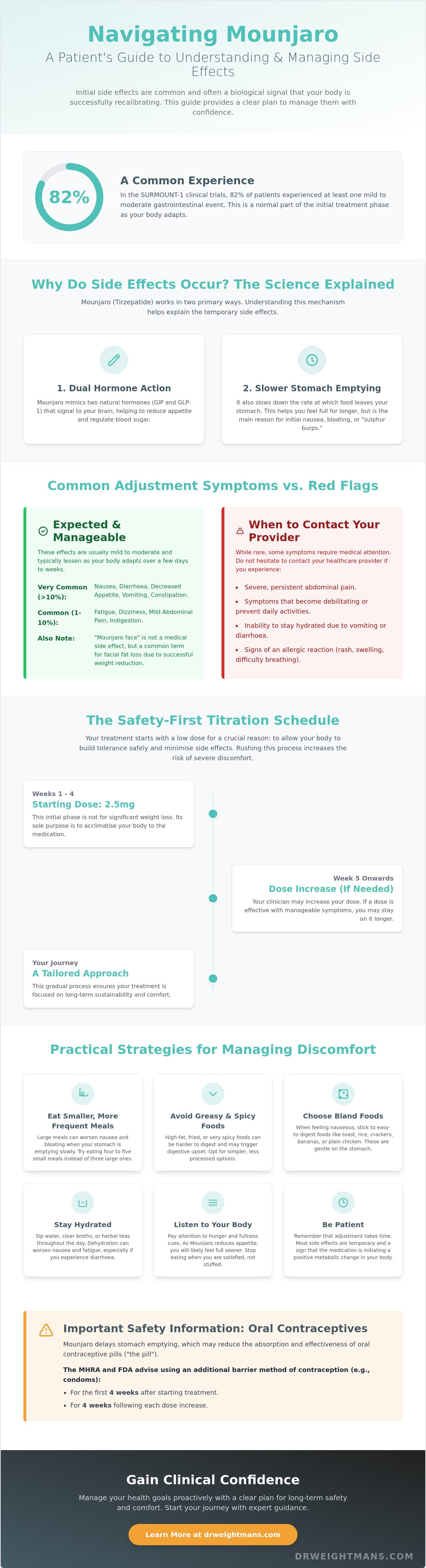
What if the nausea you experience isn’t a sign that your medication is failing, but rather a biological signal that your body is successfully recalibrating its metabolic response? It’s understandable to feel anxious when digestive discomfort threatens to interrupt your professional life or social commitments. You aren’t alone in this; clinical data from the SURMOUNT-1 trials showed that 82% of patients experienced at least one mild to moderate gastrointestinal event during their initial treatment phase. We believe that understanding mounjaro side effects is the first step toward clinical confidence, allowing you to empower your weight management journey without the fear of the unknown.
You deserve a clear path forward that doesn’t involve guesswork or constant worry about long-term impacts. This guide provides a structured plan to manage digestive upset, explains the clinical logic behind your titration schedule, and details the specific markers that indicate when you should contact your healthcare provider. By the end of this article, you’ll have the tools to mitigate discomfort whilst maintaining the momentum of your health goals with absolute peace of mind.
Key Takeaways
- Understand how Mounjaro’s dual-action mechanism affects your digestion and why initial symptoms are a sign of your body successfully adjusting.
- Learn how the structured 2.5mg titration schedule is designed to minimise mounjaro side effects whilst allowing your system to build tolerance safely.
- Discover a hierarchy of dietary adjustments and UK-specific food choices that help settle your stomach so your routine isn’t interrupted.
- Identify the specific red flag symptoms that require medical attention, ensuring you can distinguish between expected adjustment and serious health concerns.
- Gain the clinical confidence to manage your health goals proactively with a clear plan for long-term safety and comfort.
Understanding Mounjaro Side Effects and Why They Occur
Mounjaro represents a significant advancement in metabolic health, but its potency requires a period of physiological adaptation. Most mounjaro side effects aren’t signs of a negative reaction; they’re instead direct evidence of the medication’s active mechanism within your system. These symptoms typically emerge when you first begin treatment or when you transition to a higher dose every four weeks. Understanding the “why” behind these sensations can help you manage them with clinical confidence rather than anxiety.
The Biological Mechanism of Tirzepatide
Tirzepatide (Mounjaro) functions as a dual GIP and GLP-1 receptor agonist. By mimicking these two naturally occurring hormones, the medication communicates with the brain to reduce appetite whilst simultaneously slowing down gastric emptying. This means food remains in your stomach for a longer duration. While this process is essential for sustained satiety, it’s also the primary cause of digestive upset. Your body needs time to recalibrate its digestive rhythm to this new, slower pace. Most patients find their system adapts successfully within the first few days of a new dose cycle.
Normal vs Abnormal Adjustment
It’s helpful to distinguish between expected adjustment symptoms and those that require clinical attention. During the first 48 to 72 hours following an injection, you might experience mild nausea, bloating, or a change in bowel habits. Data from the SURMOUNT-1 clinical trial indicated that whilst 82% of participants reported gastrointestinal events, the vast majority were mild to moderate and resolved without stopping the medication. Typical adjustment periods last between two to four weeks as you settle into a specific dose. If symptoms become debilitating or prevent you from staying hydrated, you should contact your healthcare provider. We’re here to help you distinguish between a temporary metabolic hurdle and a genuine clinical concern.
Common vs Serious Mounjaro Side Effects: What to Expect During Titration
The clinical profile of mounjaro side effects is well-documented in the FDA-approved prescribing information, which categorises symptoms by their frequency. Very common effects, occurring in more than 10% of patients, include nausea, diarrhoea, and decreased appetite. Common symptoms, affecting between 1% and 10% of users, often manifest as fatigue, dizziness, or mild abdominal pain. You might also hear mentions of “Mounjaro face” amongst online communities. This isn’t a medical condition but a result of rapid subcutaneous fat loss in the facial area, a common outcome of successful weight reduction during any intensive programme.
The Importance of the Titration Schedule
Your treatment begins with a 2.5mg introductory dose for at least four weeks. This isn’t intended for significant weight loss; it serves as a vital safety mechanism to build metabolic tolerance. Skipping doses or rushing to higher strengths increases the risk of severe gastrointestinal distress. If you find a particular dose effective whilst maintaining manageable symptoms, your clinician may suggest staying on that strength longer rather than increasing it immediately. This tailored approach ensures you start your journey with a focus on long-term sustainability and comfort.
Contraception and Fertility Warnings
A specific clinical warning exists regarding oral contraceptives. Because tirzepatide delays gastric emptying, it may reduce the absorption and efficacy of “the pill” during certain windows. The MHRA and FDA advise using an additional barrier method, such as condoms, for the first four weeks after starting treatment and for four weeks following each dose increase. This precaution is essential to prevent unplanned pregnancies whilst your body adjusts to the medication’s impact on your digestive transit time. We recommend discussing your contraceptive choices with a pharmacist to ensure your protection remains robust throughout your treatment.
Practical Strategies for Managing Nausea and Digestive Issues
Managing your body’s response to medication is a skill that improves with consistency. While common and serious side effects of Mounjaro can feel daunting, most gastrointestinal issues respond well to simple environmental changes. A primary challenge for many is the occurrence of “sulphur burps,” which result from food sitting in the stomach longer than usual. You can reduce this by avoiding heavy meals late in the evening and opting for lighter, easily digestible options like plain oatcakes or ginger tea. These small adjustments help your digestive system process nutrients without becoming overwhelmed.
Dietary Adjustments for Comfort
Adopting a “little and often” approach is the most effective way to mitigate mounjaro side effects related to nausea. Instead of three large meals, aim for five smaller portions throughout the day. This prevents the stomach from over-stretching, which is a common trigger for vomiting. During the first 72 hours after a dose increase, it’s wise to avoid:
- High-fat or fried foods that further slow gastric emptying.
- Spicy seasonings that can irritate the stomach lining.
- Overly fibrous vegetables, such as raw broccoli, which may cause bloating.
Lifestyle and Hydration Tips
Hydration is not just about comfort; it’s a clinical necessity. Drinking at least two litres of water daily supports kidney function, which is vital whilst your body processes weight loss medication. If you experience dizziness or headaches, it’s often a sign of electrolyte depletion rather than the drug itself. Adding a sugar-free electrolyte tablet to your water can provide immediate relief. If you’re ready to take the next step in your health transformation, start your journey with our expert clinical support team today. We provide the tailored advice needed to maintain your protein intake and manage fatigue through gentle movement, ensuring you stay on track toward your goals. Proactive management of mounjaro side effects ensures that your path to better health remains both safe and sustainable.
When to Seek Medical Advice and Long-Term Safety
Whilst most mounjaro side effects are transient and manageable, your safety remains the absolute priority. A small percentage of patients, typically less than 1% according to clinical trial data, may experience more serious complications that require prompt medical intervention. Knowing how to distinguish between standard adjustment symptoms and “red flag” markers is essential for maintaining clinical confidence. We encourage all patients to report any unexpected reactions via the UK Yellow Card scheme, which helps the MHRA monitor the long-term safety of medications across the country.
Identifying Serious Complications
You should seek immediate medical advice if you experience severe, persistent abdominal pain that radiates through to your back. This specific sensation can be a clinical indicator of pancreatitis. Other symptoms requiring urgent attention include:
- Persistent vomiting that prevents you from keeping down fluids, risking severe dehydration.
- Signs of a severe allergic reaction, such as swelling of the lips, tongue, or throat.
- Changes in urine colour or jaundice (yellowing of the eyes or skin), which may indicate gallbladder or liver issues.
- Severe light-headedness or a rapid heartbeat that doesn’t settle with rest.
Professional Support and Monitoring
The Dr Weightmans clinical team is here to support you throughout your treatment, moving beyond simple dispensing to provide genuine person-centered care. Our structured consultation process is designed to identify potential risks before they become issues. Regular check-ins are a vital component of your mounjaro prescription, allowing us to review your progress and offer tailored advice if mounjaro side effects become difficult to manage. We combine our heritage as a trusted physical pharmacy network with modern digital oversight to ensure you can empower your weight management journey with total peace of mind. If you’re ever unsure about a symptom, our expert pharmacists are just a confidential consultation away.
Empower Your Health Transformation
Navigating your health goals doesn’t have to be a solitary process. You now have the clinical tools to distinguish between expected metabolic adjustments and symptoms that require professional intervention. By prioritising hydration, adopting a “little and often” eating pattern, and following your titration schedule exactly, you can effectively manage mounjaro side effects whilst staying focused on your long-term results. Success is built on these small, consistent lifestyle adjustments combined with expert oversight.
Dr Weightmans is your partner in safe weight management. As a UK Regulated Pharmacy that dispenses over 200,000 items monthly, we combine our heritage of physical store excellence with a modern digital service. You can shop with confidence knowing our Discreet Express Delivery protects your privacy at every step. Begin your clinical consultation for Mounjaro today and take the first step towards a healthier future. You have the knowledge and the support needed to succeed; it’s time to start your journey with clinical confidence.
Frequently Asked Questions
How long do Mounjaro side effects usually last?
Most mounjaro side effects are temporary, typically lasting between 48 and 72 hours following an injection. These symptoms often peak during the first four weeks of treatment or immediately after a dose increase as your system adjusts to the medication’s mechanism. Clinical data indicates that gastrointestinal events usually resolve within two to four weeks for the majority of patients as metabolic tolerance is successfully established.
Can Mounjaro cause hair loss during weight loss?
Hair thinning, known clinically as telogen effluvium, occurred in approximately 5.7% of participants during clinical trials. This isn’t a direct side effect of the medication itself but is a common physiological response to rapid weight loss and significant calorie restriction. Ensuring you maintain a protein intake of roughly 0.8g to 1.2g per kilogram of body weight can help support hair health whilst your body undergoes these metabolic changes.
What should I do if I miss a dose of Mounjaro?
If you miss a dose, you should administer it as soon as possible within 4 days, or 96 hours, of the scheduled time. If more than 4 days have passed, skip the missed dose entirely and resume your regular schedule on the next planned day. You must never administer two doses within 3 days of each other, as this significantly increases the risk of severe mounjaro side effects and gastrointestinal distress.
Does Mounjaro affect the contraceptive pill?
Yes, Mounjaro can reduce the efficacy of oral contraceptives because it slows the absorption of medications within the stomach. Clinical guidelines recommend using an additional barrier method, such as condoms, for 28 days after starting treatment and for 28 days following each dose increase. This precaution is vital for preventing unplanned pregnancies whilst your digestive transit time is being modified by the medication’s dual-agonist action.
Can I drink alcohol whilst taking Mounjaro?
You can drink alcohol in moderation, but it’s generally advised to limit intake as it may exacerbate nausea and increase the risk of low blood sugar. Alcohol is also calorie-dense and can irritate the stomach lining, potentially worsening digestive upset during your adjustment phase. Many patients find their desire for alcohol naturally decreases, with some clinical observations suggesting a significant reduction in cravings for 40% of users during treatment.